A Quick Primer
Imagine you are looking at an AM/FM radio in your car or living room. If you want to listen to a local commercial broadcast station, you can select a station between 88 to 108 MHz for FM and 540 to 1600 kHz for AM.
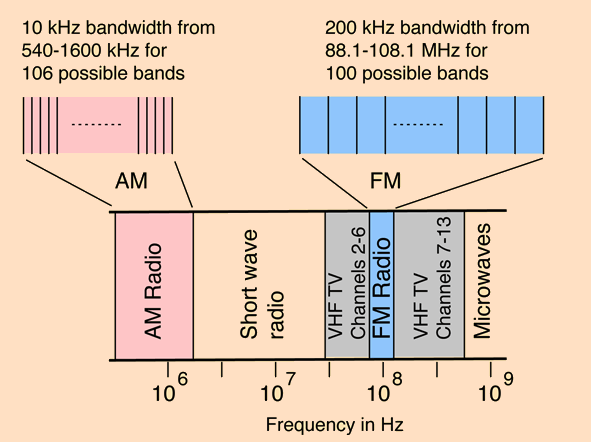
The chart above is a small and simplified slice of the entire radio spectrum. Radio isn’t just for audio. You can transmit video and data too. Let’s zoom out a bit and take a look at some of the other parts of the spectrum.

Capabilities
The sections of the spectrum designated as amateur bands allow for the transmission of voice, video, and data for non-commercial use. Depending on the frequencies, the type of equipment used, and other factors like solar weather – transmissions in the amateur bands can be sent and received across the globe or to astronauts in space!
Regulation
The radio spectrum is broken up into many bands, and the allocation and regulation of those frequency spans are under the control of the Federal Communications Commission (FCC) and the National Telecommunications and Information Administration (NTIA).
While you can buy a pair of battery-operated walkie talkies at a store and use them at home, other equipment requires special licensing. Requiring folks to have a license ensures that their use does not interfere with critical infrastructure used in other parts of the radio band. Additionally, unskilled use of commercial or homemade equipment can be a danger to physical safety.
The American Radio Relay League
Use of the spectrum is fiercely competitive, and regulation ensures high levels of reliability for commercial and government use. To ensure that the amateur bands will always be available for amateur-use, the ARRL lobbies Congress and the FCC on behalf of amateur radio operators. ARES, the Amateur Radio Emergency Service – is the community service arm of the ARRL.